Opened Packs and Kennel Shelves: Storing Disposable Pet Towels Between Sessions
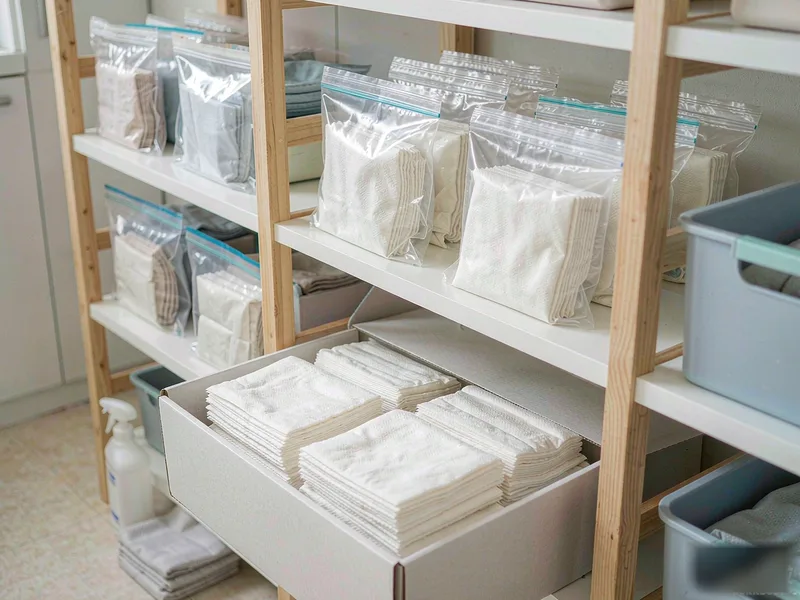
A sealed pack and an opened pack are two different products on the same shelf. Sealed, the recorded shelf life of these towels is about 3 years; once a pack is open, the usable window shortens to roughly 6 months. Between those two states sits the daily reality of a grooming shop or a kennel: packs opened mid-session, shelves within reach of tubs and dryers, and a hygiene line that decides which towel is still clean enough for the next dog. Choosing a pack format is a specification question; this article covers everything after the seal breaks.
What Changes When the Seal Breaks
An opened pack stops being a closed environment. Dust settles on the top towel, moisture from the bathing area reaches the stack, and every hand that reaches in is a new contact. None of this makes the towels unusable on its own — it makes them exposed, which is why the roughly 6-month window after opening exists as a separate figure from the roughly 3-year sealed figure. The practical consequence is simple: an opened pack lives in the working zone and gets used up; sealed stock lives in storage and stays sealed.
Opened First, Sealed Second
The single most effective rule is also the least interesting one: finish the opened pack before starting a new one. Every pack opened "because it is closer" adds another partially used pack to the shelf, and each of those runs its own 6-month clock. Sealed packs stay in their original carton until the working pack runs out — the carton is the packaging the shelf-life figure was recorded against, and against dust and moisture it works better than an open shelf.
If the pack format is resealable, close it between sessions. Where the format is a plain bag without a reclosable feature, a clip or a covered bin achieves the same thing: the goal is a barrier against dust and splashes, not an airtight seal.
Where the Shelf Sits
Location does more for an opened pack than any closing method. The bathing zone throws water; the dryer throws heat and moving air; the floor collects everything. A dry shelf or closed cabinet, off the floor and away from both zones, is the whole requirement. Shampoo and disinfectant bottles belong in a different compartment — this is a storage rule, not a material claim: which chemicals a towel should be tested against is a project question, and what a towel should never be is stored open beside an open bottle.
Reading Your Own Shelf
| Situation | Risk to the pack | Working rule |
|---|---|---|
| Open shelf beside the tub | Splash and airborne moisture between sessions | Move to a closed cabinet, or keep only the working pack there and cover it |
| Shelf above or beside the dryer | Heat and constant airflow drying the stack | Keep towel stock in a cooler, dry spot away from the drying station |
| Carton directly on the shop or kennel floor | Floor moisture and contact contamination | Store cartons off the floor, on a rack or pallet |
| Opened pack carried between rooms | The pack crosses dirty and clean zones | One opened pack per zone; do not carry open packs through the wet area |
The Hygiene Boundary: Two Rules That Hold Everywhere
First, the drop rule: a towel that touches the floor is spent — it is used for the current dog where that is still appropriate, or it goes to waste, but it never goes back into the pack. Second, the reaching rule: hands that have just handled a wet, shampooed dog do not rummage in the next pack. These two rules cost nothing, and they are the difference between an opened pack that lasts its 6 months and one that becomes a contamination risk by week two. One dog, one set of towels; the pack is a dispenser, not a reset button — a towel that has been out of the pack and handled does not become new again by being put back.
What the Shelf-Life Figures Apply To
The roughly 3-year sealed and roughly 6-month opened figures are the recorded shelf life for this product range as Jaroll states them; other suppliers' products carry their own figures, and the number to trust is the one in the written documentation. The figures also assume the storage side of this article is being followed — a pack stored open beside the tub sits outside the conditions the figures describe. And the clock on an opened pack is a use-by discipline, not a hard switch: the working rule in a busy shop is simply not to let opened packs accumulate.
A Checklist to Post on the Shelf
- Sealed cartons: dry storage, off the floor, away from chemical bottles
- One opened pack in the working zone at a time; finish it before opening the next
- Close or cover the opened pack between sessions
- Drop rule: floor contact means used for the current dog or discarded, never returned
- Write the opening date on the pack when it is first opened
The Storage Question Inside the Specification
Pack format decides how much of this article happens automatically: a resealable format closes itself, a plain bag needs a clip, and a carton-based bulk format changes the whole storage plan. The disposable pet towel range records the formats available for pet grooming programs, and the pet industry page covers where single-use towels fit across grooming and boarding operations. When the storage question is part of the specification — pack format, pieces per pack, carton configuration — it belongs in the conversation before the first order, not after the first opened pack goes stale on the shelf.
The next step takes one minute: walk to the shelf, count the opened packs, and write the opening date on each. If the pack format itself is part of the problem, contact Jaroll with the shelf you need it to fit.