Housekeeping Par Levels: How a Hotel Counts Single-Use Towel Stock
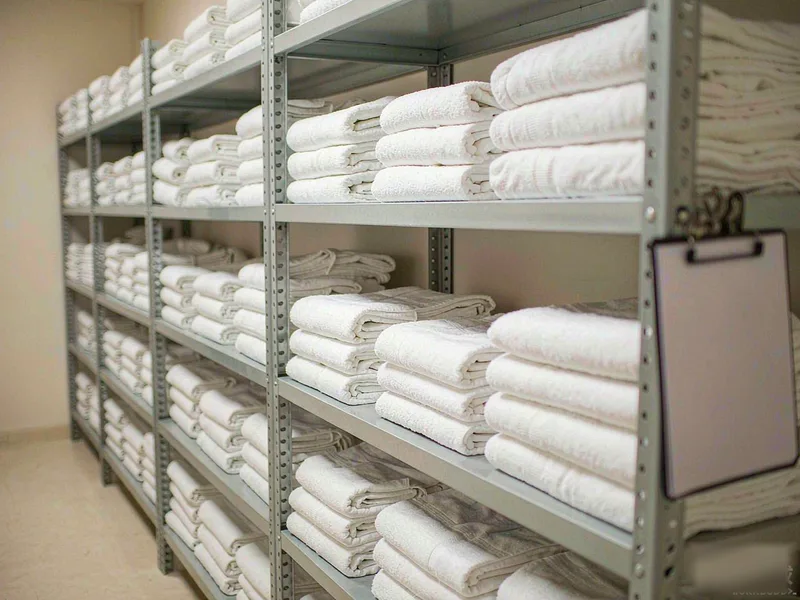
A par level is the number a shelf must never go below. For returnable linen, par absorbs the wash cycle — the stock on hand covers the time towels spend out of circulation. For single-use towels nothing comes back, so par absorbs delivery time instead: the stock on hand has to cover usage from the day an order is placed to the day the next carton lands on the shelf. This article turns that idea into a fill-in system for a housekeeping store — minimum on-shelf quantity, reorder line, count rhythm. It is a stock-control system, not a one-off usage estimate, and it belongs to the housekeeping store rather than to any single department's weekly count.
What Par Means When Nothing Comes Back
The formula is short. Daily usage times days of cover, plus a safety margin, equals the par quantity for a storage point. Every input comes from the property's own records — there is no published consumption rate to copy, and none is needed, because the count rhythm below corrects the inputs faster than any borrowed average would.
| Input | Where it comes from | Your property |
|---|---|---|
| Daily usage | occupied rooms × pieces per occupied room × occupancy | ___ × ___ × ___ |
| Days of cover | replenishment period the store must survive | ___ |
| Safety margin | occupancy swings, counts that run short | ___ |
| Par quantity | daily usage × days of cover + safety margin | ___ |
Pieces per occupied room comes from the room standard — the written decision on what one room-night consumes — not from a housekeeper's habit. That distinction is what makes the par number defensible when the budget is questioned.
One Par per Storage Point, Not One Par for the Building
A hotel stores towels in more than one place, and each place gets its own line on the par sheet. The floor pantry holds a small par sized to room-attendant rounds; the main housekeeping store holds the deep par sized to the replenishment period; a pool or gym hand-out point, if it exists, holds a service par sized to its own traffic.
| Storage point | Minimum on shelf (par) | Reorder line | Count rhythm | Refill quantity |
|---|---|---|---|---|
| Floor pantry | ___ | ___ | daily | ___ |
| Main housekeeping store | ___ | ___ | weekly | ___ |
| Pool / gym hand-out point | ___ | ___ | daily | ___ |
The refill quantity is usually a multiple of the pack or carton the stock arrives in, not a free number — refilling by whole packs keeps the count honest and the shelf tidy.
The Count Rhythm
Three rhythms, not one. A daily spot count at one or two pantries catches the day's drift in minutes. A weekly full count across every storage point reconciles the sheet against the shelf. A monthly reconciliation compares counts against issue records, and the variance is the interesting number: when counts run below par twice in a row, the usage model is wrong, not the staff, and the pieces-per-room input gets revised. Unused wrapped pieces that return to stock are counted back in on the day they return, which is only possible because the intact wrapper still certifies them — bulk towels taken to a floor and back carry no such certificate.
Replenishment Math and Lead Time
The reorder line has to be drawn before the shelf empties, and how far before is arithmetic on the supplier's calendar, not the property's. Jaroll produces to order — regular private-label runs usually take about 20 working days once the deposit and packaging artwork are settled, excluding booking and shipping, and Jaroll does not hold finished-goods stock to top up an order that runs late. The reorder trigger therefore reads: on-hand quantity at or below daily usage multiplied by lead time in days, plus safety days.
Two more boundaries from the production side. Private-label minimums for towels and bath towels usually run 40,000 pieces per SKU, so a reorder is a production run, not a basket of goods. And stock rotation works on the sealed-shelf-life rule — sealed stock keeps about three years — which means the par sheet should consume opened cartons before sealed reserve, oldest first.
Where the System Bends
- Seasonal occupancy. A single annual par is wrong twice a year; the sheet needs a high-season and a low-season version, re-cut from each season's own occupied-room history.
- Zones outside housekeeping control. A third-party spa or pool concession keeps its own par; the hotel's sheet should not carry the operator's numbers.
- Occupancy shocks. A par built on a stable year absorbs a shock badly. The safety margin is the honest place to absorb it, and it should be revisited after any month that ran far off the average — not padded permanently.
From Sheet to System
The par sheet earns its keep when it is boring: same storage points, same count rhythm, same variance review each month. Start with one floor and the main store for one month, then copy the sheet to the remaining floors and the hand-out points. The hospitality program page shows the towel formats the sheet will be counting, and the bath towel range and towel range carry the sizes behind each line. When the sheet is stable and the reorder lines are known, the next step is to put the cover days, the formats and the par quantities into one inquiry through contact so the production calendar and the shelf calendar meet in the middle.