Black and White Salon Towels: Choosing by Service and What the Color Hides
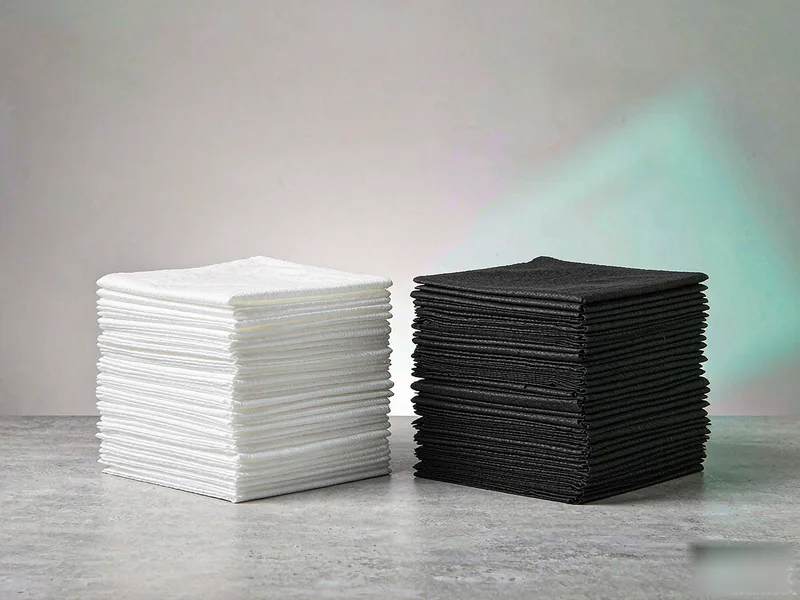
Choose the color by what you need to see. At the color bar, where tint transfer is routine, a black towel keeps its clean look through the whole appointment; at the basin and the mirror, a white towel shows product residue the moment it appears, which is exactly what a stylist needs to see before retiring a piece. The choice is a visibility decision, not a chemistry one, and it is a different question from what a color service should test — that is a project conversation. It is also not a question of the specification: both colors sit in the same recorded salon range at the same 50–100 GSM reference, and the color field is one line among several.
What Each Color Does to the Eye
Black and white manage opposite risks. Black absorbs the visual evidence of color work: a smudge of tint on black fabric reads as shadow, so the working towel at the color bar stays visually quiet during the messiest service in the building. White collects evidence: residue, discoloration, and product transfer all show, which at a wash or styling station is not a flaw but the control itself — a spent piece is obvious, and it gets retired on the spot. Neither color is cleaner; they answer different questions about who needs to see what, and when. A towel that hides everything protects the client's perception; a towel that shows everything protects the stylist's judgment. The salon floor needs both, in different places.
Choosing by Service
Run the split station by station, not towel by towel:
| Station or service | The color that fits | The visibility logic |
|---|---|---|
| Color and perm bar | Black | Tint, lightener and developer transfer is routine; black keeps the working towel out of the client's attention |
| Wash basin | White | Residue and discoloration show on white, so a spent piece is caught immediately |
| Styling and finishing | White | Product residue should be visible to the stylist before it is visible to the client in the mirror |
| Neck and shoulder protection during a cut | Either, in the interior's scheme | The towel is on display for the whole appointment, so the room decides |
| Reception and retail shelf | Either, in sealed original packaging | Unopened packs read as stock rather than linen, and the pack is what the eye meets |
The recorded range carries both: white salon towels for the basin and the mirror, black viscose salon towels for the color bar.
What the Color Does Not Change
Three things the color is often asked to do, and cannot. It does not change the specification: material family, GSM, size, and fold are chosen independently, and within the salon range both colors carry the same 50–100 GSM reference — a black towel is not heavier, stronger, or more forgiving than its white counterpart. It does not change the chemistry: color is not a barrier against lighteners or developers, and which chemicals a towel should be tested against is a project question, settled case by case. And it does not change the count: black and white are two lines to plan and count separately, and because towel minimums are usually quoted per SKU, a color split is a planning decision rather than a free option.
Store Style and the Shelf
The towels at the chair are on display for the length of the appointment, so the interior has a vote. Black reads deliberate in dark, editorial rooms; white reads clinical and bright, and suits rooms that sell hygiene first. Where the split lands is a brand decision — but it is cheaper to change the room than the working logic, so let the stations lead and the decor follow. On the shelf, keep stock in unopened original packaging: sealed packs read as hygienic stock, and opened packs go straight into rotation. The recorded shelf-life guidance runs about 3 years sealed and about 6 months once opened, which is why opened packs lead and sealed packs wait. How a whole floor's colors, sizes, and pack positions add up into one program is the same exercise the salon program overview walks through.
Where the Split Earns Its Keep — and Where It Does Not
The split assumes single use: the visibility logic is about retiring pieces, not about judging laundry. It assumes color work happens often enough to matter — a salon that runs one tint a week may find a single color covers the whole floor, while a color-led salon lives on the split. And it applies to the recorded salon range, where white and black are the two color records; anything beyond those two is a project conversation, not a catalog option.
The Next Step
Write the two lines — which stations run black, which run white — and give each line its own size and count. That two-line page turns the color decision, which is otherwise re-made at every appointment, into a decision made once. When the split is written, put it in front of Jaroll and check what production can hold consistent between the two lines.