Disposable Towels for Hairdressers: What Each Service Actually Needs
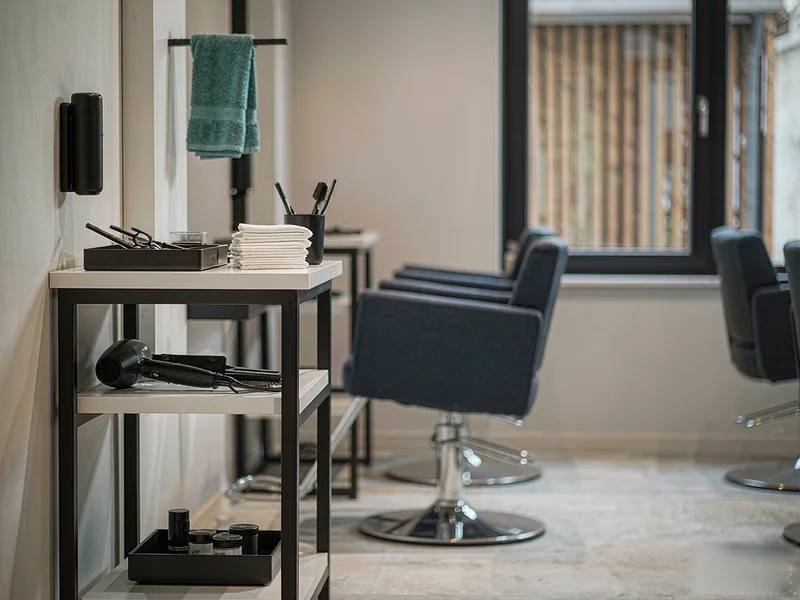
A hairdressing service does not run on one towel used one way. It runs on the same rectangle doing four different jobs at four different moments: the piece that protects a client's neck during a cut is not the piece that dries hair at the basin, and neither is the piece that sits between tint and a collar during a color service. This guide divides a salon appointment into its stages and matches each stage to the towel size, color, and dispensing point that fits it. It is deliberately not another GSM weight comparison, and not a chemistry testing checklist — those are separate decisions, and they only make sense once the stage map exists.
Four Stages, Four Jobs
From a fifteen-minute trim to a four-hour transformation, every appointment passes through the same sequence of towel moments. Each moment asks something different of the piece in hand, which is why a single specification for the whole floor leaves some stations under-served and others overstocked. This is where choosing disposable towels for salon work actually ends: not in one product, but in a short list of pieces, each assigned to a stage.
| Service stage | What the towel is doing | What that job asks of the piece |
|---|---|---|
| Cutting | Neck and shoulder protection under and over the cape; loose-hair cleanup at the end | Soft against skin, large enough to drape — the 40×80 cm end of the recorded size range; a color that sits well in the room |
| Wash and care | Blotting and drying hair after the basin | The moment the towel takes on the most water; a full-size piece, swapped the instant it is saturated |
| Color and perm | Isolation between product and skin or collar; wiping bowls, tools, and spills | A color that keeps its clean look under routine tint transfer; pieces pulled one at a time at the color bar |
| Styling finish | Final wipe at the mirror; product residue from hands, neckline, and face | A smaller piece from the 30×50 cm end is usually enough; residue should be visible so staff know the piece is spent |
Size by Stage
The recorded towel range runs from 30×50 cm to 40×80 cm, and that span covers the whole service with room to spare. The logic is coverage: jobs that drape a body or dry a head of hair need the large end, and jobs that wipe a neckline or a tool need the small end. A salon rarely needs many sizes — it needs two, assigned deliberately instead of by habit.
| Size | Stages it covers |
|---|---|
| 30×50 cm | Styling finish, neckline and tool cleanup, spot isolation during color work |
| 40×80 cm | Cut draping, basin drying, full isolation during color and perm |
Sizes between the two ends of the range exist, and some floors prefer one middle size for everything. That is a legitimate simplification — provided it is written down as a decision rather than arrived at by default. When a chain writes one program across several floors, the same stage logic is what keeps the size list short; the towel range shows how each size carries its own recorded specification.
Color and Visibility at Each Station
Color is a visual-management decision before it is an aesthetic one. At the color bar, tint transfer is routine, and on a white towel every smudge reads as a stain; on black, the same smudge reads as shadow. At the basin and the mirror, the opposite logic wins: white shows product residue, so a piece that has done its job is obvious and gets retired on the spot. The recorded salon range carries both — white salon towels and black viscose salon towels — each at a 50–100 GSM reference, so choosing a color does not disturb the other specification fields.
The short version: black where stains are routine, white where visibility is the control. The longer version — what each color hides, what it shows, and how the choice interacts with the interior — is a decision with its own trade-offs, and it belongs to the stations, not to the towel.
Where the Pack Sits
The best-specified towel fails if it is not within arm's reach at the moment it is needed. Each stage has a natural dispensing point: the basin wants a pack at shoulder height that can be worked with one wet hand; the cutting chair wants pieces under the mirror console; the color bar wants pieces that can be pulled one at a time while wearing gloves. A single shared pack on a trolley is never quite at the right station, because it is at none of them.
When a whole group writes one program across floors, these per-station habits are the difference between a towel plan and a mere towel order — and the salon program is the kind of document that stage map becomes.
What This Map Does Not Decide
Three decisions sit outside the stage map, and treating them as settled is how a good map gets misused. First, GSM: within the recorded 50–100 GSM salon reference, weight is arithmetic — piece weight, hand feel, and what a pack carries — and it deserves its own comparison instead of being smuggled in with the stage table. Second, chemistry: whether a towel holds up against a particular lightener or developer is not a question a stage map can answer; which chemicals to test against is a project question, settled case by case with the supplier. Third, barbering: a hot-towel service adds heat and moisture requirements that sit outside both this map and the recorded specification fields, so it should be briefed as its own use case.
The Next Step
Write the four stages across the top of a page, assign each a size and a color, and note where the pack sits. That one page is a complete towel map for the floor — and it is the document that turns into a specification. When yours is written, start the conversation and put the stage map in front of someone who can check it against production.