From Material to Pack: What Goes Into a Private-Label Towel Brief
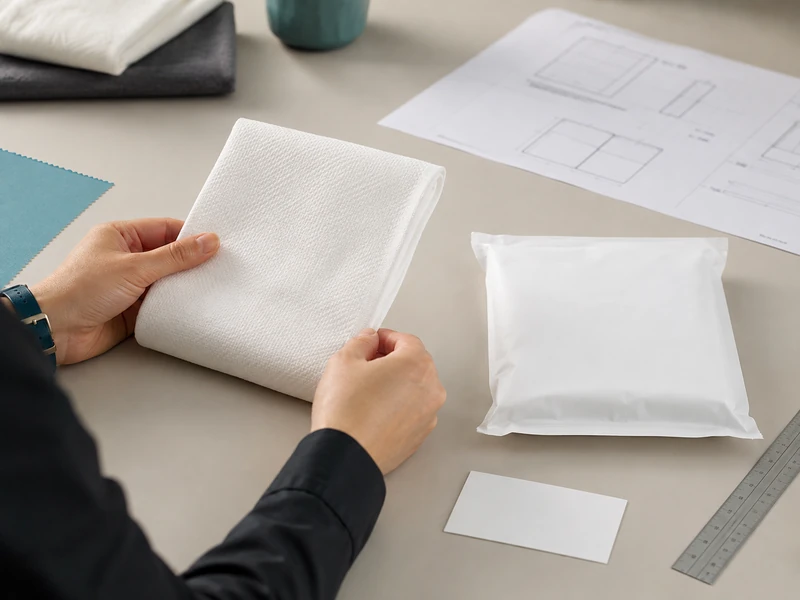
A private-label towel project rarely goes off course because someone forgot the open size. It usually goes off course because the decisions around that size were left for later.
For a disposable towel, the brief should describe the working routine as well as the product. A salon towel kept in a back-room carton, a spa towel handed to a guest and a face towel dispensed one at a time do not need the same format, even when the materials look similar on paper.
The most useful OEM discussions start by putting the following decisions in one document.
1. Describe the use before selecting the specification
Start with the setting: hair salon, beauty studio, spa, hotel, fitness facility, pet-care business or another professional environment. Then explain how the towel will be handled. Will staff take one towel at a workstation? Will it be part of a treatment-room set? Will it be sold through a distributor or displayed at retail?
This gives the supplier context for discussing a suitable size, format and packaging route. It also makes later sample feedback much more precise.
2. Record the product fields that need agreement
For professional-use disposable towel projects, the brief should identify the requested size, material, GSM, texture and colour.
At Jaroll, product-development discussions may cover Viscose, Viscose / Polyester, Cotton, Wood Pulp / Polyester and Wood Pulp / Polypropylene, subject to final project confirmation. Salon and spa towel discussions can also cover available size, GSM, texture and colour options according to the agreed product range.
Do not treat GSM as a standalone quality statement. It should be reviewed together with material, texture, intended handling and the target market.
3. Treat the pack format as part of the product
The pack decides how the towel moves through the customer’s business: storage, replenishment, presentation and use.
For towel and bath-towel projects, Jaroll can discuss folded bulk packs or individually packed units. Pull-out packs are used for face-towel projects; disposable towels and bath towels are not supplied in pull-out or roll formats. Confirm the inner-pack quantity, outer carton and any handling needs before approving a sample.
4. Add the private-label details early
Artwork is only one part of a private-label brief. Record the brand presentation, labels, barcode needs, language, outer-carton information and destination market at the start. A distributor may need carton labels for warehouse handling; a retail channel may need different information on the pack.
Any environmental, certification or performance claim should be reviewed against the final material, product specification and destination-market requirements before it appears on packaging or sales materials.
5. Make the sample approval useful
Before sampling, the buyer and supplier should be aligned on the use case, target specification and open questions. Once a sample is ready, review it against that same brief rather than relying on a general impression.
This is particularly important when a project involves private-label packaging. A finished sample should represent not only the towel but also the way it will be packed, labelled and taken to market.
A practical starting point
A clear private-label towel brief does not need to be complicated. It needs to connect the service routine with the product and pack decisions that follow from it.
Jaroll works with distributors, brand owners and OEM customers on disposable spunlace nonwoven towel projects for professional-use environments. Request an OEM specification discussion with your application, target market and expected packaging needs.