Fitness Operator Revenue Rose 10.7% in 2025: What Growing Clubs Should Standardize
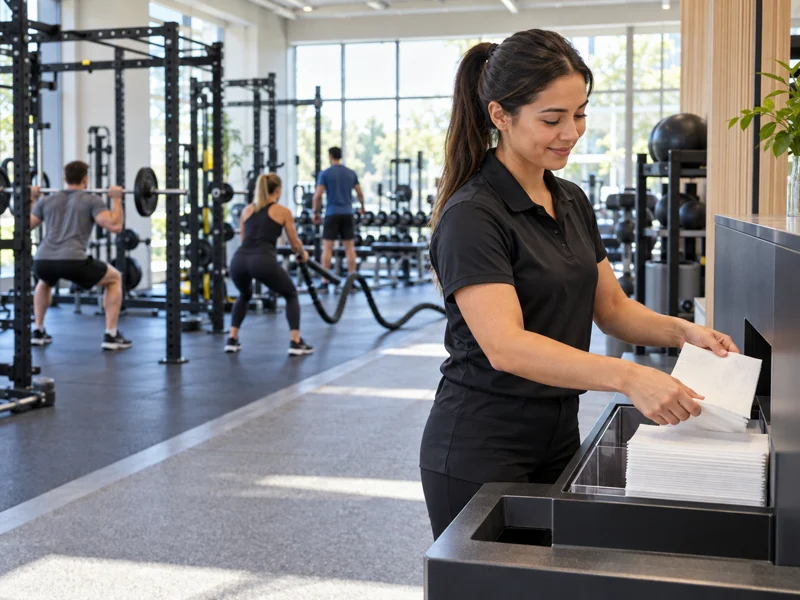
As of September 2026, commercial fitness operators report strong financial and membership growth, but revenue is still the wrong unit for forecasting towel use. The HFA Global Report recorded median 2025 revenue growth of 10.7% and median net membership growth of 6.1%. A gym should translate that growth into visits, service zones and verified units used before setting a disposable towel forecast.
How broad is the HFA evidence base?
The 2026 HFA Global Report covered 33 countries and included more than 200 operator profiles. The underlying operator survey covered 244 companies and nearly 27,000 facilities. More than 85% of operators expected membership growth, and about two-thirds planned to increase technology investment.
A separate HFA FIT Tracker for August 2026 used anonymous foot-traffic data from more than 10,000 US commercial fitness locations. Weighted visits per location increased 2.4% year over year, the strongest monthly gain of 2026. High-value, low-price clubs grew 3.0%, boutiques 2.5%, mid-market clubs 2.0%, while premium clubs declined 1.5%.
| Fitness measure | Reported change | What it can support |
|---|---|---|
| Median operator revenue | +10.7% | Commercial growth context |
| Median net membership | +6.1% | Member-base growth context |
| Median EBITDA margin | 22.1% | Financial benchmark for respondents |
| August US visits per location | +2.4% | Physical activity signal for one month |
| HVLP visits per location | +3.0% | Segment-level demand signal |
How should clubs convert growth into a towel forecast?
Start with the locations where a towel is actually offered: entrance pickup, studio class, recovery area, shower area or staffed desk. For each zone, record daily visits, offer rate, units taken per user, restocking frequency and loss or waste. A club can then test whether membership growth changes physical usage.
Format matters too. Folded bulk packs can fit a staffed or controlled dispenser routine, while individually packed units may fit grab-and-go or selected amenity use. Neither format should be called more hygienic, more sustainable or less expensive without a defined comparison.
What should a gym towel specification include?
- Named use zone and intended action.
- Open size, composition, GSM, texture and color.
- Fold, pack count and the dimensions of the storage or pickup point.
- Daily and peak-hour replenishment assumptions.
- Destination-market labels and private-label artwork, if applicable.
- Approved sample and written production specification.
What do the HFA figures not prove?
Revenue growth, membership growth and foot traffic do not establish towel consumption, germ reduction, cleaning performance or return on investment. Those conclusions need facility-level usage and product testing. The HFA data is useful for planning scenarios, not for attaching a performance claim to a towel.
Frequently asked questions about gym towel programs
Is membership count enough for forecasting?
No. Active visits, service zones and the offer rate are closer to physical usage than registered membership.
Should studios and full-service clubs use the same format?
Not by default. Their class schedules, showers, staffing and dispensing points can be materially different.
Where can buyers review Jaroll's fitness application?
See Jaroll's Gym & Fitness Center solution and confirm the final product and pack specification for each site.
Research note
Prepared by the Jaroll Editorial Team from the cited public sources and Jaroll's documented product-selection framework. Market figures describe their source markets; they are not Jaroll sales data or product-performance claims. Last reviewed: September 30, 2026.
Sources
- Health & Fitness Association, September 14, 2026 — revenue, membership, EBITDA, outlook and survey-coverage figures.
- Health & Fitness Association, September 10, 2026 — August FIT Tracker foot-traffic changes by segment.
- Jaroll Knowledge Base, Gym & Fitness Center application mapping and claim-control records, reviewed September 30, 2026.